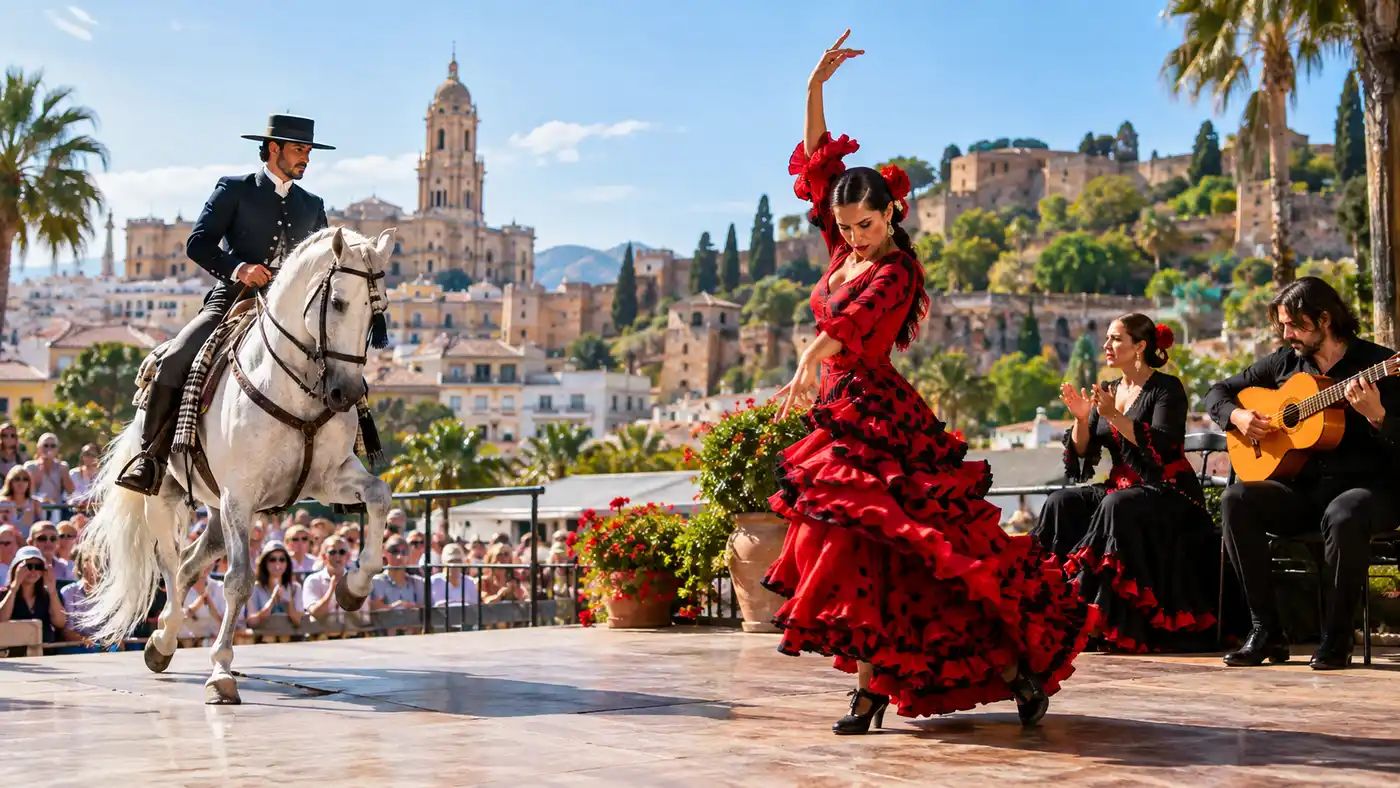
Andalusian Horse and Flamenco Shows in Malaga
The smell hits you first. It is a mix of dried straw, worn saddlery leather, and the damp earth they spray down before the gates swing open. Watching an andalusian horse and flamenco show in malaga is not something you stumble across inside the polished marble alleys of the historic city center. You have to head out toward the foothills, where the coastal highway yields to dry scrub and whitewashed ranches. Out here, the wind carries guitar chords across open sand paddocks, and the horses move with a strange, deliberate pride that feels centuries older than the surrounding resort towns.
Most travelers come to the Costa del Sol looking for beach bars or historic Moorish castles. Yet the equestrian bloodline here is just as ancient. When you pair an Andalusian stallion with a dancer in ruffles, you might expect something kitschy cooked up purely for tour buses. Some of it is undeniably staged for visitors. Even so, the sheer skill required to balance classical dressage movements with the strict twelve-beat compas of traditional flamenco leaves most people speechless within five minutes of the opening fanfare.
Book your flamenco show malaga experience:
What to Expect at an Andalusian Horse and Flamenco Show in Malaga
The arena dirt is raked clean before the lights dim. When the music starts, it usually opens with a solo Spanish guitar ringing through the loudspeakers, soon joined by the deep, hollow clatter of hooves on packed sand. These horses are Pura Raza Española. They have thick, arched necks, long manes that brush against the rider's stirrups, and an odd gentleness in their dark eyes. You will see classical dressage maneuvers, Alta Escuela, mixed with countryside cattle-herding techniques known as Doma Vaquera.
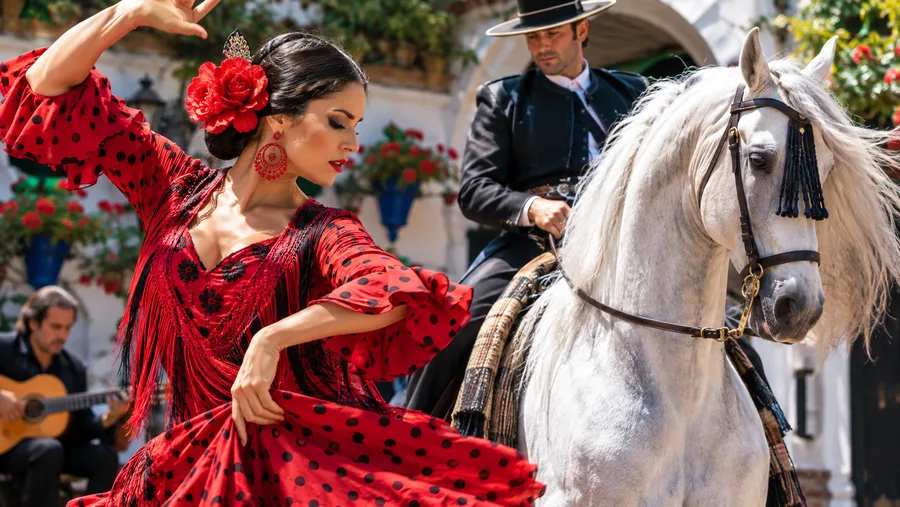
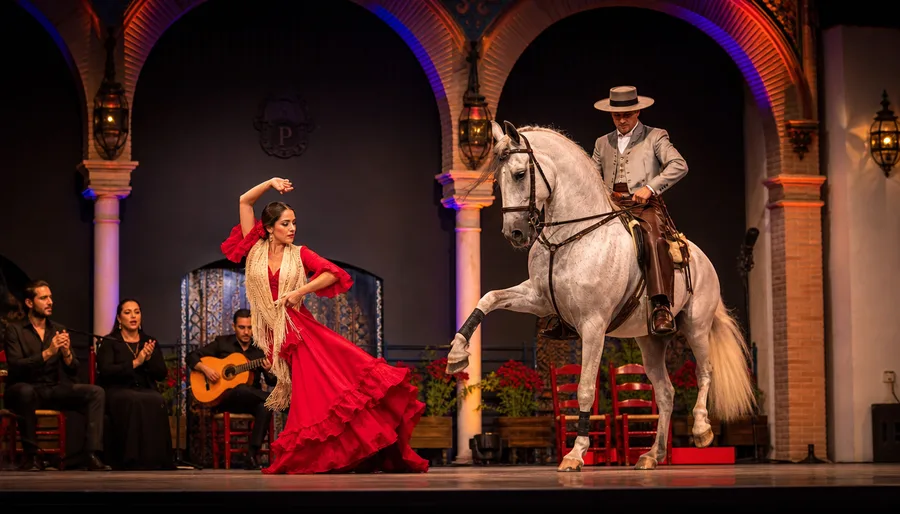
The dancers appear right on the arena floor. There is no stage separating the woman from the stallion. She dances in the sand, her heels kicking up fine dust with every zapateado, while a rider in a flat-brimmed cordobes hat guides the horse into a synchronized caracole around her skirt. At times, the horse mirrors her footwork with a piaffe, an elevated trot on the spot that shakes the wooden railings around the front row.
Pro tip: Pick seats in the third or fourth row rather than right against the ring railings. You get a far better view of the horse footwork without getting a shower of fine arena sand every time a stallion executes a fast pirouette.
A typical performance lasts roughly 90 minutes, broken into six or seven themed acts. One sequence features riders handling long wooden poles called garrochas, leaning so low out of the saddle that their shoulders almost graze the dirt. The next brings out four carriage horses hitched in line, followed by solo footwork battles where the dancer and horse exchange rhythms like two jazz musicians improvising in a basement club. It feels theatrical, sure, but the horsemanship is dead serious.
Kids tend to stay wide awake throughout the performance because the pacing moves quickly. If you have sat through quiet indoor recitals where fidgeting feels like a crime, this open-air setting is refreshing. Spectators cheer, gasp, clap along with the rumba sections, and sip cold beer while the trainers showcase pirouettes and Spanish walks.
Top Venues for a Horse and Flamenco Show Malaga Visitors Can Book
You have two main dedicated ranches near Malaga hosting these combined spectacles, along with a world-renowned day-trip alternative down the highway toward Cadiz province. Choosing between them comes down to whether you want an easy 20-minute hop from the airport area or an intimate country ranch setting deeper in the hills.
Club Hipico El Ranchito sits on the outskirts of Torremolinos, barely 15 minutes by car from Malaga city center. They have staged their flagship production, "Ritmo a Caballo," every Wednesday evening for more than 30 years. It runs like clockwork. The covered arena seats around 500 spectators, making it the largest and most consistent horse and flamenco show Malaga has to offer. The choreography here leans heavily into dramatic ensemble work, featuring up to twenty horses in a single evening.
Further west along the coast road, Finca El Cartujano in Mijas Costa presents a more rustic, family-run alternative. Run by the Sanchez family, this venue hosts evening performances on Thursdays during the main travel season. The vibe here feels less commercial. You walk past the outdoor stables, talk directly with the grooms brushing down the mares, and watch the performance in an intimate outdoor ring surrounded by olive trees and flowering bougainvillea.
If you want pure historical majesty and do not mind a long drive, the Real Escuela in Jerez de la Frontera is the global epicenter of this tradition. It sits roughly two hours west of Malaga. It does not focus on flamenco dancers sharing the dirt ring, leaning instead on strict classical ballet equestrianism, but its historical weight is impossible to ignore.
| Venue | Location | Show Days | Typical Cost | Setting |
|---|---|---|---|---|
| Club Hipico El Ranchito | Torremolinos (15 km from Malaga) | Wednesdays | €27 - €32 | Large covered arena |
| Finca El Cartujano | Mijas Costa (32 km from Malaga) | Thursdays | €25 - €30 | Open-air farm ring |
| Real Escuela Andaluza | Jerez de la Frontera (220 km) | Tuesdays & Thursdays | €23 - €35 | Grand historic indoor arena |
If you stay strictly within Malaga city limits without a rental car, El Ranchito is the obvious choice. Taxis run there easily from Maria Zambrano train station for about €22 each way. Finca El Cartujano requires a bit more effort to reach, yet the mountain backdrop against the setting sun creates a far more romantic memory.
Ranch Atmosphere, Food, and Logistics
Most organizers bundle the performance with optional dinners. At El Ranchito, you can book an extended ticket that includes bus transport from the arena to a local restaurant for a post-show dinner and a secondary indoor flamenco performance. It sounds convenient on paper. In practice, moving 150 tourists onto coach buses and herding them into a banquet hall can drag out what was otherwise an exciting evening.
At Finca El Cartujano, dining happens right on the property. They fire up a massive barbecue grill near the courtyard, serving roasted pork, chorizos, bread with garlic alioli, and carafes of sangria under string lights. The food is simple peasant fare, nothing sophisticated, but eating on the farm terrace while listening to a local singer strum bulerias feels wonderfully unhurried. If you want a more refined culinary evening back in town, explore our guide to the best flamenco dinner shows in malaga instead of booking the arena group menus.
Note: Arena temperatures drop fast once dusk settles over the Malaga hills, even during July and August. Bring a light denim jacket or scarf, because open-sided equestrian buildings catch every gust of valley draft.
The logistics are straightforward if you plan ahead:
- Arrival window: get to the gates 45 minutes prior to start time so you can tour the stables and see the stallions being tacked up.
- Transport booking: pre-book a return taxi through your hotel if visiting Finca El Cartujano, as ride-hailing apps rarely have drivers idling in the Mijas countryside at 10:30 PM.
- Ticketing packages: buy the show-only admission and eat dinner independently later in Malaga or Fuengirola for better culinary quality.
- Photography rules: flash photography is strictly banned to prevent blinding or spooking the horses, though standard video without lights is widely permitted.
Seeing the horses in their stalls before the show starts adds a whole layer of appreciation to the evening. The grooms are usually happy to point out the breeding lines, showing off the Carthusian brand marks stamped on the animals' flanks. You realize quickly that these creatures are treated like family royalty, groomed with painstaking care before every single routine.
Book your flamenco show malaga experience:
Understanding the Tradition: The Pura Raza Espanola and Flamenco
The Andalusian horse is not an accident of nature. Monks in Jerez, Seville, and Cazalla bred these animals in monastery studs starting in the late fifteenth century. Kings across Europe coveted them for their bravery in battle, their agility, and their natural capacity for collected movement. They possess a docile temperament paired with an explosive physical presence, which explains why a rider can put an 1100-pound stallion through complex footwork inches away from a dancer without risking her safety.
Flamenco itself sprang from the marginalized communities of southern Spain, blending Romani, Moorish, and traditional Andalusian folklore. While the dance lived on cobblestone patios and in roadside inns, the horses lived on vast cortijos owned by wealthy landowners. The two worlds first merged at country ferias. During springtime fairs, cattle traders showed off their best stock, and gypsy musicians played on street corners. Riders would parade through the fairgrounds while women danced sevillanas alongside the horses.
If you are curious about the deeper roots of this regional culture, check out the flamenco museums and traditions in malaga to see how rural working customs gradually transformed into performing arts. The connection between horse handling and guitar song is etched into the folklore here.
To enjoy the show fully, it helps to understand what the riders and dancers are doing:
- Doma Vaquera: traditional Spanish stock-riding discipline using one hand on the reins while the other controls the garrocha pole.
- Piaffe: a rhythmic, highly elevated trot performed entirely on the spot, echoing the staccato footwork of the dancer.
- Paso Castellano: the slow, dramatic walk where the horse lifts its front legs with high knee action, matching solemn guitar tempos.
- Sevillanas con Caballo: a regional four-part folk dance where rider and bailaora complete synchronized figures together on the dirt.
Watching a rider execute a flawless passage, where the horse floats forward in slow motion, demands years of quiet schooling. When the guitar accelerates into a frenzied zapateado and the horse matches the tempo without breaking cadence, you understand why locals treat these trainers like celebrated artists.
Booking an Andalusian Horse and Flamenco Show in Malaga: Practical Advice
Tickets sell out rapidly between mid-June and late September. Because both primary venues only run one or two public performances each week, missing your planned date means waiting another seven days. Book at least a week ahead during high season. Off-season travel between November and March is quieter, but El Ranchito keeps running year-round thanks to steady winter sun travelers.
Children usually receive discounted entry, often half-price for kids aged four to twelve. Infants under four sit free on parents' laps, though very young children might find the sharp crack of horse whips and loud arena acoustics a bit startling during the first ten minutes. Ear defenders can be a smart accessory if your toddler is sensitive to loud PA systems.
Renting a car makes the whole experience much simpler. The ranches offer vast free parking fields right beside the paddocks. You can spend the afternoon wandering the white mountain village of Mijas Pueblo, head down the winding road for an early evening show at the ranch, and be sitting along the seaside promenade in Fuengirola for late tapas by 10:00 PM.
Frequently Asked Questions about andalusian horse and flamenco show in malaga
What is the best andalusian horse and flamenco show in malaga?
Club Hipico El Ranchito in Torremolinos offers the most famous production with their long-running "Ritmo a Caballo" show every Wednesday. Finca El Cartujano in Mijas is an equally strong, slightly more intimate alternative on Thursday evenings.
Are the horses treated well in these performances?
Yes, the Pura Raza Espanola is among the most prized and pampered horse breeds on earth. The trainers rely on classical dressage principles that emphasize positive reinforcement, gentle bit pressure, and decades of generational horsemanship.
How long does the performance last?
The equestrian show itself runs approximately 90 minutes without a long intermission. If you purchase an optional dinner package, the entire experience extends to around three or four hours.
Can I go to the show using public transport from Malaga city?
You can take the C-1 commuter train from central Malaga to Torremolinos station, then catch a short 7-minute taxi directly to Club Hipico El Ranchito. Finca El Cartujano is harder to reach via transit and works best by taxi or rental car.
Quick Reference
- El Ranchito shows run Wednesdays around 17:45
- Finca El Cartujano shows run Thursdays around 19:00
- Tickets cost between €25 and €32 for adults
- Covered arena at Torremolinos, open-air ring at Mijas
- Ranches sit 15 to 30 minutes from Malaga center
Book your flamenco show malaga experience:
Is It Worth It?
I went into my first performance bracing for a tourist trap. When an attraction relies on costumes, tour buses, and bundled sangria, skepticism is healthy. But the moment you watch an Andalusian stallion spin on a dime and kneel in respect before a lone flamenco dancer, the cynicism evaporates. It is an art form rooted in countryside sweat, aristocratic bloodlines, and raw Andalusian flair. Skip the bland packaged dinners, buy a straight show ticket, and let the rhythmic clatter of hooves on sand take you back to an older, wilder Spain.
Read more about flamenco show malaga.