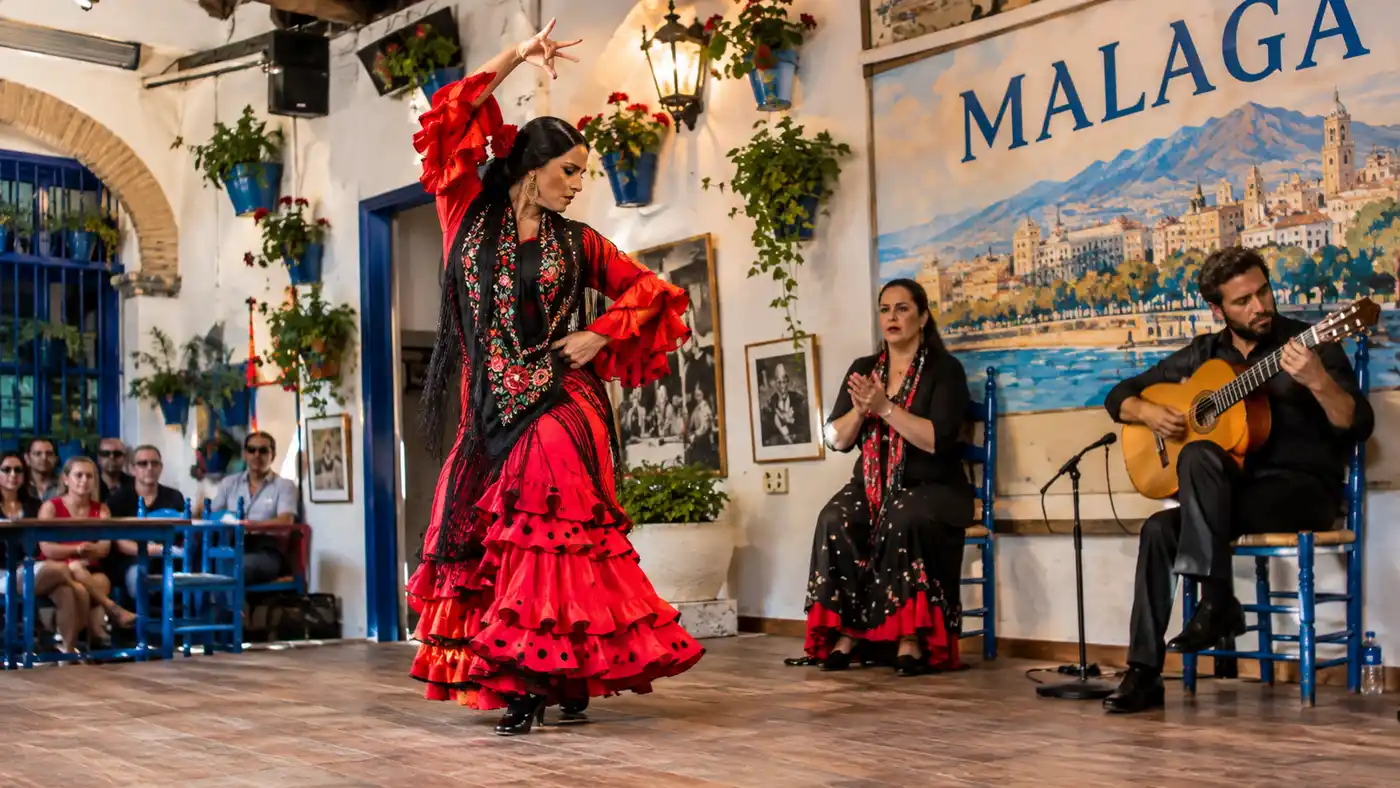
Flamenco Dance Classes and Schools in Malaga
You can hear the footwork through the open wooden shutters on Calle Carretería before you even see the studio entrance. It sounds like a drum roll, fast and sharp, vibrating straight through the sun-baked pavement. For anyone visiting Andalusia, watching a performance from the third row of a theatre is fine, but stepping onto the splintered floorboards yourself to learn flamenco dance in malaga completely shifts how you hear the music for the rest of your life.
Malaga has an intriguing dance scene. It often lives in the shadow of Seville and Jerez, which keeps the local academies grounded, welcoming, and slightly less pretentious. Whether you want a single afternoon crash course or three weeks of serious technique drills, the city offers small studios tucked inside historic quarters where patient teachers will fix your posture, teach you the twelve-beat cycle, and cure you of clapping off-beat.
Book your flamenco show malaga experience:
What to Expect from Flamenco Dance in Malaga as a Beginner
Walking into your first studio feels intimidating. You smell floor wax, sweat, and worn leather. A wall of mirrors confronts you, and the instructor usually speaks rapid-fire Andalusian Spanish, though a few switch to English or French when foreign students drop in for a cours de flamenco malaga style intensive. Do not expect to pick up a silk shawl or castanets on day one. Real training starts with how you stand. Your spine pulls straight, your shoulders drop away from your ears, and your knees soften so you do not shatter your joints against the wood.
Most of your first hour focuses on braceo (arm movements) and basic zapateado (footwork). Making sound with shoes is much harder than it looks on stage. You quickly learn that a flamenco shoe has three distinct strike points: the flat sole (planta), the tip of the toe (punta), and the heavy heel (tacón). Striking with the heel requires dropping your weight without leaning backward, an unnatural movement that makes your hip flexors ache by minute twenty.
Note: Most studios expect you to bring hard-soled shoes with sturdy, wide heels; running sneakers grip the sprung wood too tightly and can wrench your ankles or knees during turns.
Then comes the clapping. Clapping sounds simple until somebody asks you to maintain a steady counter-tempo while eight other people stomp out polyrhythms around you. There are loud, sharp claps using two fingers against the palm (palmas claras) and muffled, deeper claps made with cupped hands (palmas sordas). The softer claps are used when a singer is pouring their heart out and does not want their voice drowned by eager students.
By the end of a single session, you will probably know a rudimentary sequence of tangos. Tangos flamenco is set to an accessible four-beat count, making it the universal starting point for beginner flamenco dancing in malaga. It feels earthy, rhythmic, and far more forgiving than the agonizing twelve-beat cycles of bulerías.
Top Studios and Escuela de Flamenco Malaga Options
The city has dozens of neighborhood academies, but picking the right one depends entirely on how many days you have and how serious you want to get. Some cater strictly to neighborhood children preparing for conservatory auditions, while others welcome drop-ins with open arms.
For travelers wanting an informal, highly interactive first taste, the cultural workshop known as the iniciación al flamenco en el centro interactivo de málaga at MIMMA on Calle Beatas is brilliant. It strips away the anxiety of a formal academy. You get an explanation of the rhythms, a demonstration by working performers, and twenty minutes on your feet trying basic steps. It takes maybe 45 minutes total, making it great for families or nervous beginners.
If you want authentic studio sweat, look for an established escuela de flamenco malaga in the residential neighborhoods just outside the historic core, such as El Molinillo or La Victoria. Studios like Centro de Danza Sandra Camuñas or Escuela de Danza Montse Bravo teach pure technique. Classes run in monthly blocks, but many instructors allow temporary visitors to pay a single drop-in fee of around €14 to €19 per class if you message them a few days ahead on WhatsApp.
Pro tip: Ask your dance instructor if their academy has ties to a local neighborhood peña; accompanying students to a Thursday night social gathering will teach you ten times more about real rhythm than an isolated mirror drill.
There is also the municipal route. The city council runs seasonal cultural programming called the aula municipal de flamenco malaga, offering subsidized community workshops throughout the year. These sessions are usually aimed at local residents and taught in Spanish, but if you happen to be in town while registration is open, they offer an authentic window into how local Malagueños preserve their folk arts.
| Studio / Experience | Location | Typical Price | Best For |
|---|---|---|---|
| MIMMA Interactive Workshop | Calle Beatas | €12 - €15 | Absolute beginners, curious families |
| Private Independent Studio | La Goleta / Molinillo | €40 - €55 / hour | Accelerated one-on-one footwork progress |
| Neighborhood Group Academy | La Victoria | €14 - €19 / class | Immersion, intermediate dancers, longer stays |
| Cultural Center Taster | Soho / Centro | €25 - €32 / group | Short-term travelers wanting a fun night out |
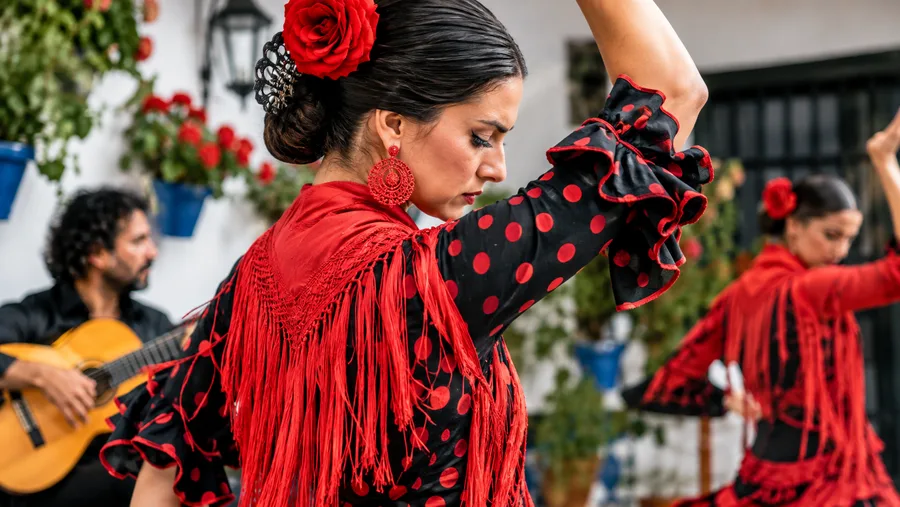
One-Off Workshops vs. Multi-Week Flamenco Dance Malaga Courses
How long you spend in Malaga should dictate how you study. A 60-minute taster workshop booked through a tour host is basically a cultural party. You learn a couple of arm flourishes, stamp your feet until you smile, take three photos in front of an Andalusian tile wall, and go drink sangria. There is nothing wrong with that, honestly. It is fun, low-pressure, and gives you a tiny hint of the posture needed for authentic flamenco dance malaga.
If you genuinely want to dance, though, you need at least three consecutive days with the same instructor. Flamenco is not intuitive for Western bodies trained in parallel lines. The form requires your upper torso to pull upward toward the ceiling while your hips and legs drive downward into the dirt. Teachers spend the entire first week breaking your instinctive habit of bouncing up and down when you stomp.
Preparing for your first week of real study requires a few practical choices:
- Footwear selection: Do not buy expensive professional semi-profesional shoes with nails in the sole unless you plan to dance for years; a thick leather shoe with a wide 4-centimeter heel works fine.
- Classroom clothing: Leave the polka-dot dresses for the ferias; real dancers wear black leggings, a breathable tank top, and a simple flared jersey practice skirt that hits mid-calf.
- Language barrier: Most studio cues are physical and rhythmic, but learning Spanish terms like golpe (flat stamp), planta (ball of foot), and vuelta (turn) will keep you from feeling lost.
- Physical pacing: Your lower back and calves will cramp after 30 minutes of continuous zapateado, so spend five minutes stretching your Achilles tendons before stepping into the room.
I remember taking a private class in a tiny room off Calle Ollerías on a sweltering Tuesday in July. My instructor, an austere woman in her fifties named Carmen, did not smile once during our warm-up. For forty minutes she stood inches away, clapping a loud pattern inches from my ear while shouting "¡Tierra! ¡Baja más!" (Ground! Get lower!). When I finally caught the syncopation on the tenth beat, she simply nodded once and said, "Now do it six more times." That single nod felt better than any applause I have ever received.
Book your flamenco show malaga experience:
The Cultural Side of Flamenco Dancing Malaga
Dancing without understanding the music produces hollow, mechanical movement. Too many foreign students get obsessed with the speed of their feet while ignoring the cantaor (singer). Flamenco is an improvisational conversation where the dancer reacts to the lyrics and the guitarist shifts chord structures based on the dancer's calls.
After your morning classes, take time to study the history at local cultural spaces. Wandering through exhibitions on flamenco museums and traditions in malaga gives you vital context on why Malaga developed its own distinct musical forms, like the verdiales and malagueñas, which have a lighter, mountain-rooted feel compared to the deep solemnity of Seville's tonás.
Spend your evenings observing professionals in intimate venues. Instead of expensive polished commercial stages, seek out authentic spots across town. Watching dancers work small rooms in the best flamenco bars in malaga lets you see how performers communicate with subtle eye contact, shoulder twitches, and micro-pauses. You notice that the greatest dancers rarely spend the entire show stomping at top speed; they command attention through stillness and tension.
That stillness is the hardest part to master in any class. Amateur dancers rush to fill silence with frantic movement. A skilled maestro will teach you that holding an extended arm frozen in mid-air while the singer drags out an agonizing vocal ornament holds far more emotional weight than forty frantic heel strikes.
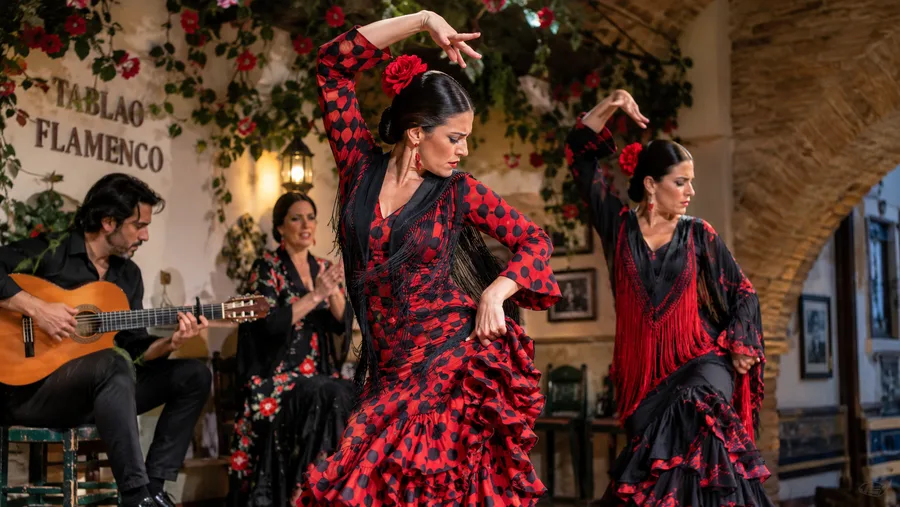
How to Choose the Right Instructor for Flamenco Dance in Malaga
Finding the right teacher in southern Spain often feels chaotic because the best teachers do not have slick English websites or active social media feeds. They have paper signs taped to studio windows, word-of-mouth reputations among local families, and a phone number that only connects via WhatsApp voice notes.
If you are filtering through instructors online or walking the back alleys of Malaga looking for a studio, keep these practical points in mind:
- Clear specialty: Look for teachers who state whether they focus on baile (dance), compás (rhythm), or comprehensive performance; generalist dance academies that teach ballet, hip-hop, and flamenco in the same afternoon rarely provide deep flamenco technique.
- Live guitar accompaniment: High-level classes bring in an actual guitarist for the final twenty minutes of class; dancing to recorded CDs is acceptable for basic drills, but learning to cue a live musician is where the art actually begins.
- Class size limits: Any footwork class with more than ten students in a small room makes it impossible for the teacher to hear individual mistakes in timing.
- Patience with foreigners: If your Spanish is rusty, confirm beforehand whether the instructor is comfortable demonstrating corrections visually rather than barking purely vocal instructions.
Private classes cost between €35 and €60 per hour, depending on the instructor's background and whether a live guitarist attends. While that costs significantly more than a drop-in group class, an hour of private instruction will iron out posture defects that could otherwise take months to fix on your own.
Frequently Asked Questions about flamenco dance in malaga
Can absolute beginners take dance classes in Malaga?
Yes. Many academies offer introductory courses designed specifically for people who have never danced a step in their lives. Studios are used to travelers stopping in for taster sessions, and beginner classes focus heavily on simple counts and fundamental arm posture rather than complex footwork.
What shoes should I bring if I do not own flamenco shoes?
Bring a leather street shoe or boot with a low, chunky heel measuring about 3 to 4 centimeters. Avoid rubber-soled running shoes because they stick to the wooden floors, and never wear thin stiletto heels or sandals, which can snap or cause serious ankle injuries.
Do instructors speak English during flamenco classes?
In tourist-oriented workshops in the city center, instructors usually speak conversational English or French. In traditional neighborhood academies, teachers almost exclusively speak Spanish, though flamenco instruction relies so heavily on counts, physical demonstrations, and rhythmic clapping that language rarely presents an insurmountable barrier.
How much do flamenco dance classes cost in Malaga?
Drop-in group sessions at local academies generally cost between €14 and €20 per class. Short group workshops aimed at visitors run around €25 to €35 per person, while private one-on-one sessions typically range from €35 to €60 per hour depending on the teacher.
Quick Reference
- Average drop-in class: €14 - €20
- Best beginner rhythm: Tangos (4-count)
- Proper footwear: Thick, low wooden or leather heel
- Key dance hub: Historic center & La Victoria
Book your flamenco show malaga experience:
Before You Step on the Floor
Learning flamenco in Andalusia is an exercise in humility. You will feel awkward, your hands will refuse to cooperate with your feet, and you will almost certainly clap on the wrong beat at least four times. Let that happen. Flamenco is not about robotic perfection or polite posture; it is about weight, presence, and honesty. Book a class, put on some sturdy shoes, leave your self-consciousness at the studio door, and let the floorboards rattle under your heels.
Read more about flamenco show malaga.