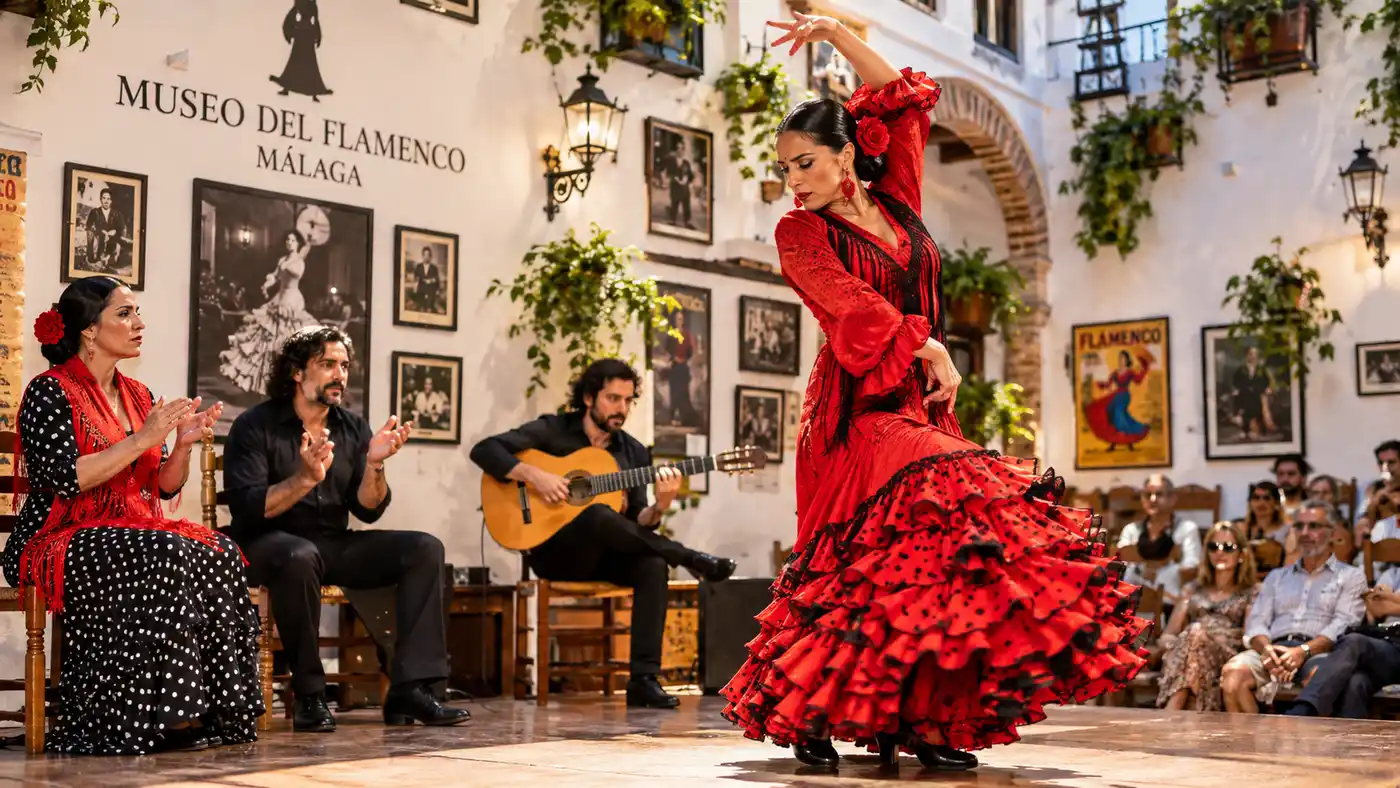
Flamenco Museums and Traditions in Malaga
Most travelers walk past Calle Ramón Franquelo without glancing twice. It sits just off the sunlit route connecting Plaza de la Merced to the cathedral, hidden behind peeling plaster and a low archway. If you type musee du flamenco malaga into your phone map while standing on the pavement outside, you might assume you are in the wrong place entirely. A tiny brass plate by a heavy wooden door is the only hint that five thousand pieces of living musical history sit quietly on the upper floors.
Malaga does not wear its flamenco heritage on its sleeve the way Seville or Jerez does. You have to hunt for it behind heavy curtains, in family workshops, and down narrow alleyways where the scent of fried fish mixes with night jasmine. The city was once the rowdy capital of 19th-century singing cafes, fostering styles so specific they altered Spanish folk music permanently. Exploring this landscape takes you through private archives, neighborhood peñas, and dusty shops where elderly artisans still stitch ruffled bata de cola skirts by hand.
Book your flamenco show malaga experience:
Tracking Down the Musee du Flamenco Malaga: Peña Juan Breva
The beating heart of flamenco history in this city is Peña Juan Breva. Founded in 1958, it holds the official distinction of being one of the oldest flamenco clubs in Spain. Guidebooks printed in Central Europe often translate the location as the muzeum flamenco malaga, which sets up odd expectations. This is not a polished museum with glass barriers and touchscreen tablets. It is a working cultural association where members sip draught beer downstairs while rare artifacts rest in glass cabinets upstairs.
The collection spreads across two narrow floors. You will find guitars built in the 1870s by Antonio de Torres, their spruce tops darkened to the shade of burnt toast. There are over three thousand shellac records, original wax phonograph cylinders, and charcoal portraits of singers who died penniless before the Spanish Civil War. The museum honors Antonio Ortega Escalona, known universally by his stage name Juan Breva, who was born in nearby Vélez-Málaga. He sang with such piercing power that King Alfonso XII booked him for private palace recitals in Madrid.
Note: The museum rooms on the upper floors are kept locked when staff are busy downstairs. You often have to ask the bartender politely to switch on the display lights and hand you the key.
Take your time with the costume room. Unlike the stiff tourist outfits sold along Calle Larios, the vintage silk dresses here show real sweat stains under the arms and frayed hemlines from gravel courtyards. Flamenco was hard labor for working-class women in the port districts of El Perchel and La Trinidad. Seeing those threadbare shawls makes that reality sink in fast.
The Sounds That Belong Here: Flamenco Tangos de Malaga and Malagueñas
Every corner of Andalusia claims its own rhythm. Cadiz has its bouncing alegrías, Seville owns the theatrical sevillana, and Malaga claims the malagueña along with a singular take on the tangos. The malagueña belongs to the cante libre category. That means it follows no rigid time signature. The singer stretches out vowel sounds according to lung capacity and sheer emotion while the guitarist holds suspended chords, waiting patiently for the melody to resolve.
Then comes the flamenco tangos de malaga. If you listen to a tango from Triana, the rhythm drives forward with a sharp, crisp bounce. Malaga slows the tempo down. The pulse turns lazy, swinging like a boat tied to a wooden pier in the harbor. The lyrics reflect local street humor, fishing hazards, and bittersweet heartbreak. El Chino, a legendary local singer from the late 20th century, made this style famous across the country by singing about everyday life with absolute emotional honesty.
Much of this music evolved directly from verdiales. These are ancient rural dance tunes played in the Montes de Málaga using violins, tambourines, and brass cymbals. Peasants would walk down from mountain almond orchards during winter festivals, bringing their raw energy into port taverns. Over decades, those country rhythms married gypsy vocal phrasing, giving birth to the distinct flamenco de malaga that still echoes through local bodegas.
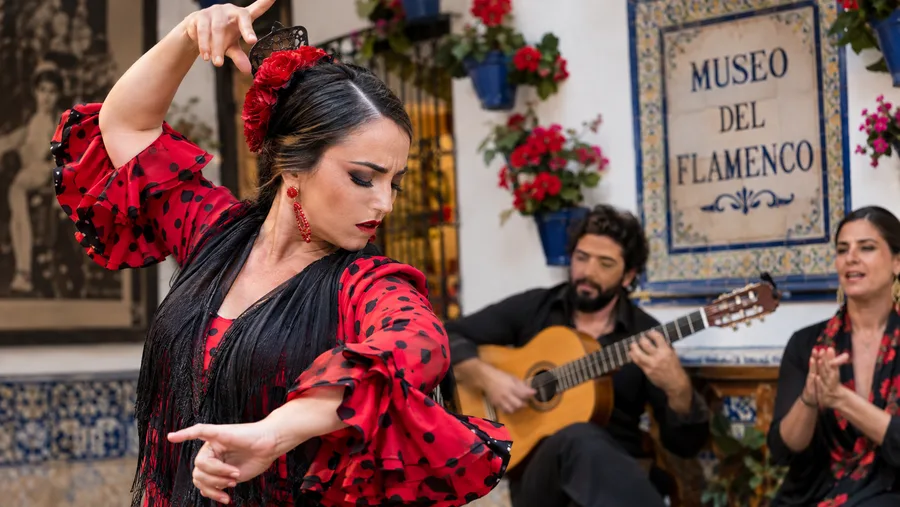
Museums, Peñas, and Cultural Spaces Compared
Understanding the full picture of the city's musical roots requires visiting more than one building. Some venues focus on technical instrument history, while others preserve the raw community life of the art form.
| Venue | Type | Primary Collection | Admission | Best For |
|---|---|---|---|---|
| Museo de Arte Flamenco Peña Juan Breva | Peña / Archive | Antique guitars, wax cylinders, stage outfits | €2 (free with drink) | Hardcore music history and real atmosphere |
| MIMMA (Music Museum) | Interactive Museum | Historical world instruments and Spanish guitars | €5 | Hands-on learning and children |
| Museo de Artes y Costumbres Populares | Ethnographic Museum | 19th-century regional dress and pottery | €4 | Context on rural Andalusian working life |
| Centro de Arte Flamenco La Malagueta | Cultural Center | Rotating photo exhibitions and lectures | Free | Contemporary photography and modern projects |
The Museo Interactivo de la Música (MIMMA), housed in an 18th-century palace on Calle Beatas, offers something completely different from the Juan Breva archives. It holds red-walled interactive rooms where visitors can pick up genuine nylon-string guitars or sit behind a wooden cajón box drum. An audio guide walks you through the complex syncopation of the twelve-beat compás. It sounds simple until your hands try to clap on beats three, six, eight, ten, and twelve. Try it for five minutes and you will gain an instant, humbled respect for every professional bailaor in Spain.
Pro tip: Visit Peña Juan Breva on a Tuesday around 9:00 PM. That is when regular club members gather for informal singing sessions, and the atmosphere feels far more genuine than a weekend tourist performance.
Book your flamenco show malaga experience:
Dressing the Part: Biznagas de Malaga Flamenco Style and Artisan Shops
Look closely at the hair of a dancer performing in the city and you will notice something peculiar. In Seville, dancers usually pin a large, flat carnation or silk peony directly on top of their head. In Malaga, women often wear a white spherical bloom known as a biznaga tucked behind the left ear.
The biznaga is not a botanical flower grown in soil. It is an intricate piece of summer handcraft. Artisans gather wild thistles, strip the leaves down to an umbrella-like skeleton, and dry them in the sun. On warm July afternoons, they collect unopened jasmine buds and carefully push each stem into the thistle needles. At nightfall, the jasmine blossoms burst open into a perfect white sphere, releasing an intoxicating perfume. In traditional performance spaces, the biznagas de malaga flamenco motif appears everywhere: painted across wooden fan ribs, carved into tortoiseshell hair combs, and embroidered into the corners of silk Manila shawls.
If you want to buy legitimate performance gear rather than cheap polyester souvenirs made overseas, you have to bypass the souvenir stalls around the port. Head instead into the older trade streets surrounding the Church of San Juan. That is where local dancers buy their gear.
- Viva La Feria (Calle Cisneros): This family-run shop supplies local dancers with fitted skirts, custom castanets, and traditional mantones. The staff can fit you for authentic shoes with hand-hammered steel nails in the heel.
- Mercería El Torcal: A tiny notions shop where amateur seamstresses source dense cotton ruffles, mother-of-pearl buttons, and fringe for festival dresses.
- Artesanías San Juan: A reliable stop for hand-painted folding fans made of polished pearwood, sturdy enough to survive hours of wrist-snapping technique without cracking.
A pair of beginner-level leather dance shoes with nailed soles runs around €65. If you decide to pick up a pair, take a look at our guide to flamenco dance classes in Malaga before signing up, because mastering the basic footwork takes patience and steady ankles.
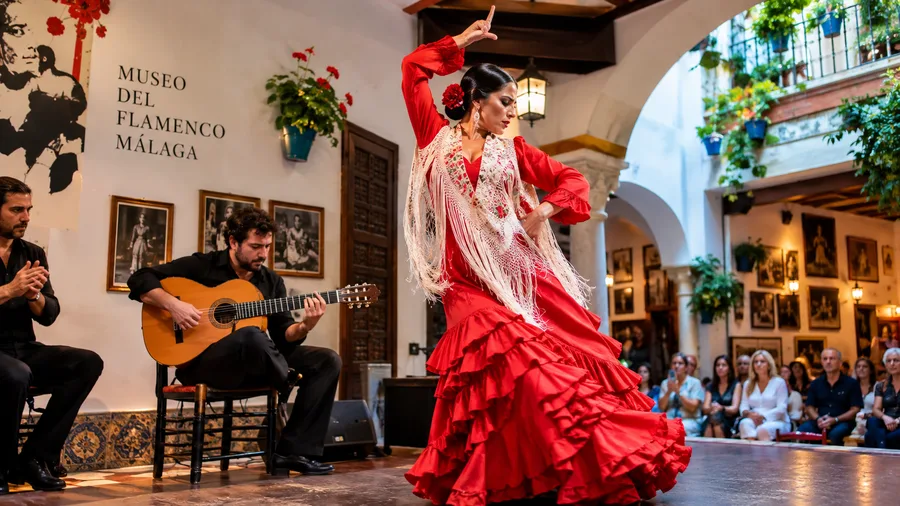
Living Traditions: Peñas and Evening Gatherings
Museum walls only tell half the story. Flamenco was never intended to hang silently in a climate-controlled room. It requires wine, wood smoke, and an audience shouting encouragement when a guitarist nails a tricky chord transition. To see how these 19th-century traditions survive today, you need to step inside an active peña during an evening recital.
A peña is essentially an amateur cultural guild. Members pay modest monthly dues to keep the lights on and fund weekend performances by regional artists. The doors are open to outsiders, but you must respect the unwritten house rules. These are listening rooms, not party bars.
- Maintain silence during the singing: Clinking glasses or talking during a malagueña is considered genuinely offensive. Save your applause and cheers for the moments when the performer finishes a long melodic phrase.
- Keep your palms quiet: Unless the performers clearly gesture for the entire room to clap along, do not attempt to join the rhythm. Flamenco time signatures are deceptive, and an off-beat clap will instantly throw off the singer's timing.
- Order simple drinks: Peñas are blue-collar social halls. Order an ice-cold caña of Victoria beer, a glass of dry fino sherry, or a plate of cured Manchego cheese. Cocktails are rarely served.
If you prefer an informal night out where drinks flow a bit more freely while music plays, check out our favorite flamenco bars across Malaga. You will often stumble across young guitarists rehearsing falsetas in the corner while old men argue about football scores.
Flamenco here is not a museum piece preserved for tourists. It is woven into the neighborhood identity. You hear it leaking through the shutters of apartment buildings on Calle Carretería on Sunday afternoons. You smell it in the jasmine sold by street vendors dressed in black waistcoats. And if you sit quietly upstairs at Peña Juan Breva on a rainy afternoon, you can almost hear the ghosts of port workers stomping their boots on the pine boards.
Frequently Asked Questions about musee du flamenco malaga
Where is the main flamenco museum located in Malaga?
The primary museum is the Museo de Arte Flamenco at Peña Juan Breva, located at Calle Ramón Franquelo, 4. It sits in the historic city center, roughly a five-minute walk from Plaza de la Constitución.
How much does it cost to visit the flamenco museum?
General admission to the museum at Peña Juan Breva is €2. If you stop at the ground-floor bar for a beer or a tapa, the bartender will often let you visit the museum rooms upstairs for free.
What makes Malaga's flamenco traditions unique?
Malaga developed regional singing styles known as malagueñas, which feature flexible, unmetered vocals, as well as the slower, swinging tangos de malaga. Local performers also wear jasmine biznagas in their hair instead of standard carnations.
Quick Reference
- Location: Peña Juan Breva, Calle Ramón Franquelo, 4
- Highlights: 1870s Torres guitars, 5,000 archival pieces, wax cylinders
- Key Local Styles: Malagueñas, Tangos de Málaga, Verdiales
- Iconic Symbol: Handcrafted jasmine biznaga worn by bailaoras
Book your flamenco show malaga experience:
My Take
Skip the neon-lit tablaos on the beach strip if you want to understand what makes this corner of Spain sound the way it does. Walk into the quiet rooms of Peña Juan Breva, stand an inch away from a guitar built before your great-grandparents were born, and listen to the floorboards creak. It will change the way you hear every single note for the rest of your trip.
Read more about flamenco show malaga.